
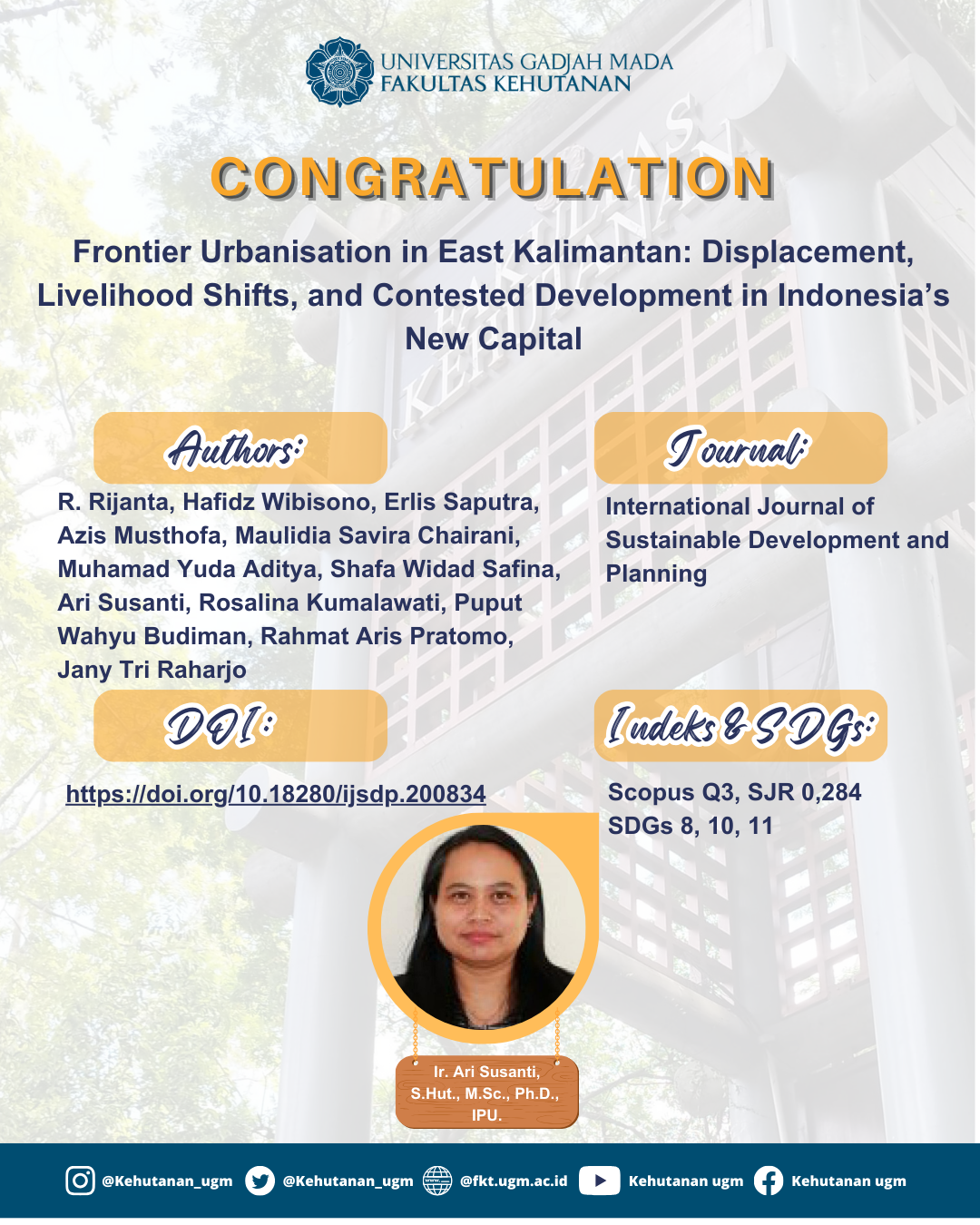
Abstract
Urbanization in the Global South is increasingly influenced by large-scale infrastructure and frontier development, frequently exacerbating disparities and displacing marginalized populations. This paper situates Indonesia’s new capital (IKN) within debates on neoliberal urbanism and resource extraction, examining how long-established resource-based communities in East Kalimantan perceive IKN’s urbanisation. Research was conducted in a village within IKN’s official delineation, using surveys, interviews with 74 local and government informants, and field observation (Aug 2023-Mar 2025)—thematic analysis, complemented by government and NGO reports, compared planned and actual outcomes. While state and corporate narratives present IKN as a green and inclusive modernisation engine, communities historically reliant on mining, plantations, and agriculture express ambivalence. Indigenous informants emphasise the loss of customary land rights through coercive acquisitions and insufficient compensation, exacerbated by post-IKN land price inflation. Migrant labourers view IKN as an economic opportunity but face low wages and exclusion from skilled positions, reinforcing labour hierarchies. The paper frames IKN as frontier urbanisation reproducing historical patterns of accumulation by dispossession, without addressing structural inequalities. The findings enhance discussions on Global South urbanism, promoting policies that support indigenous sovereignty and ensure equitable distribution of the benefits of urbanization.
SDGs:
SDG 8 :Decent Work and Economic Growth
SDG 10 :Reduced Inequality
SDG 11:Sustainable Cities and Human Settlements
Link Dokumen:
Download