Abstract
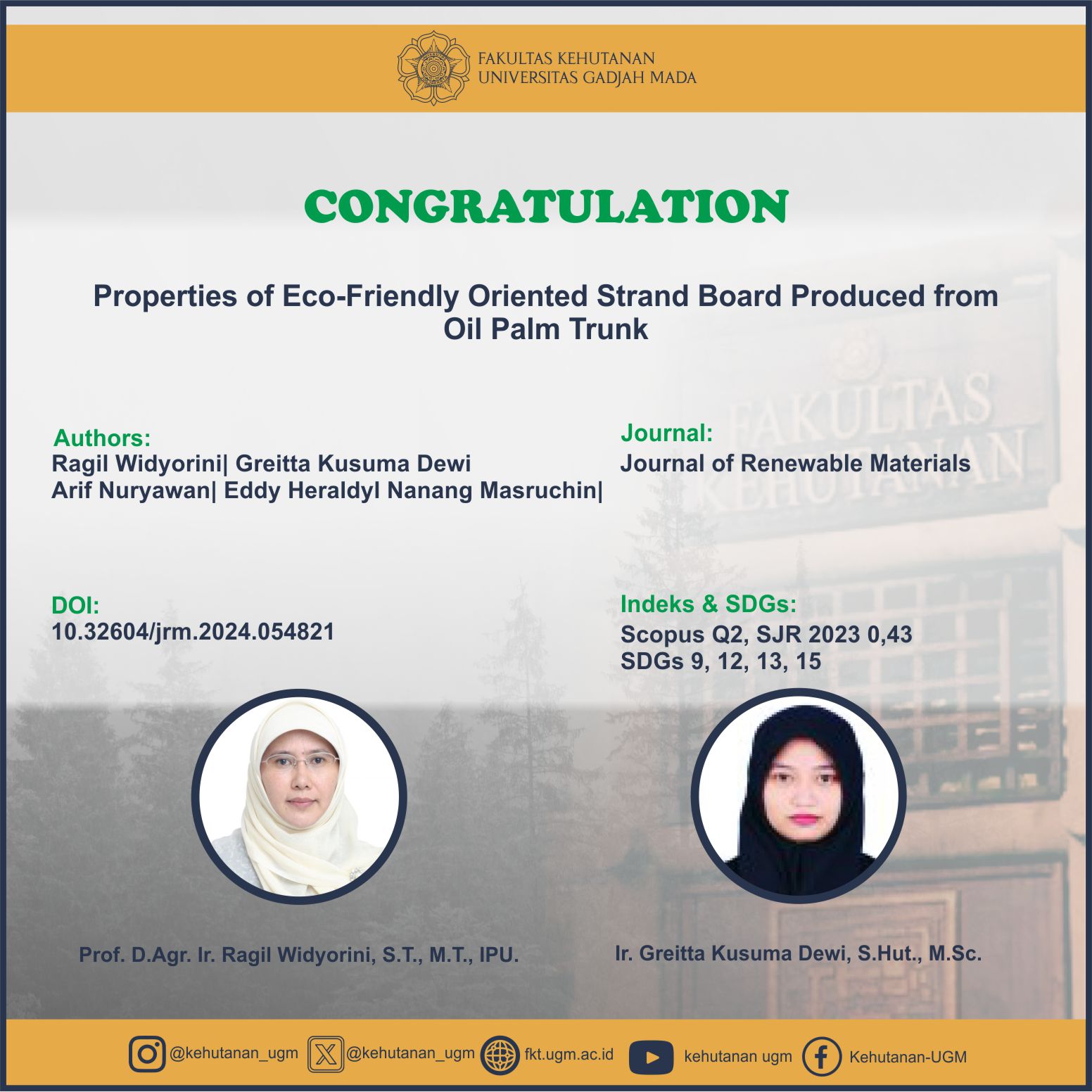
Despite its considerable potential, oil palm trunk (OPT) remains underutilized, largely owing to the cyclical replanting process that occurs every 25–30 years. This study aimed to address this issue by developing an ecofriendly oriented strand board (OSB) using vascular bundles (VBs) from oil palm, both in binderless form and with the incorporation of natural adhesives made from sucrose and ammonium dihydrogen phosphate (ADP). The VB was extracted
Kepada seluruh Staf Pendidik Fakultas Kehutanan Universitas Gadjah Mada, dalam meningkatkan iklim diseminasi hasil-hasil penelitian di lingkungan Fakultas Kehutanan Universitas Gadjah Mada, dengan ini kami sampaikan informasi bahwa Fakultas Kehutanan UGM menawarkan Hibah Bantuan Publikasi dalam lima skema dan satu skema penghargaan sebagai berikut.


Link Dokumen KAK:
Download
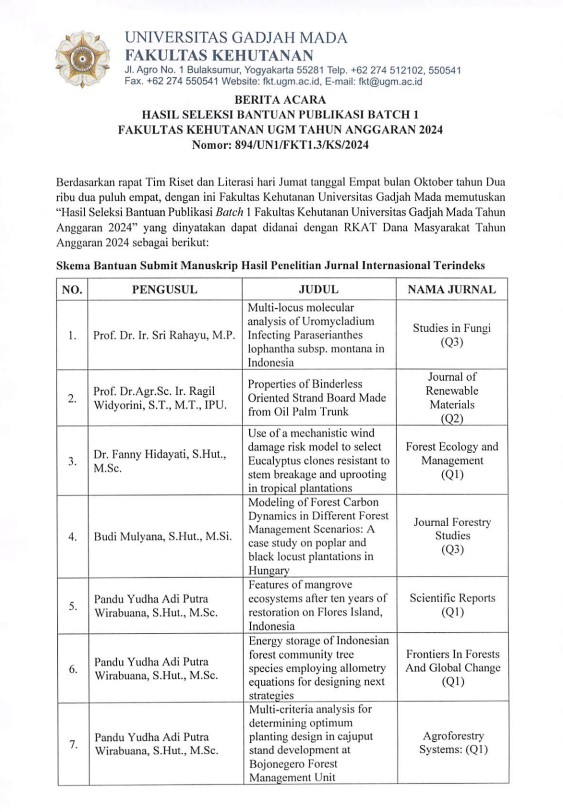
Berdasarkan hasil rapat Tim Riset dan Literasi hari Jum’at, 4 Oktober 2024 dengan ini Fakultas Kehutanan Universitas Gadjah Mada memutuskan Hasil Seleksi Bantuaj Publikasi Batch 1 Fakultas Kehutanan Universitas Gadjah Mada Tahun 2024 sebagai berikut:

Link Dokumen:
Download

Abstract
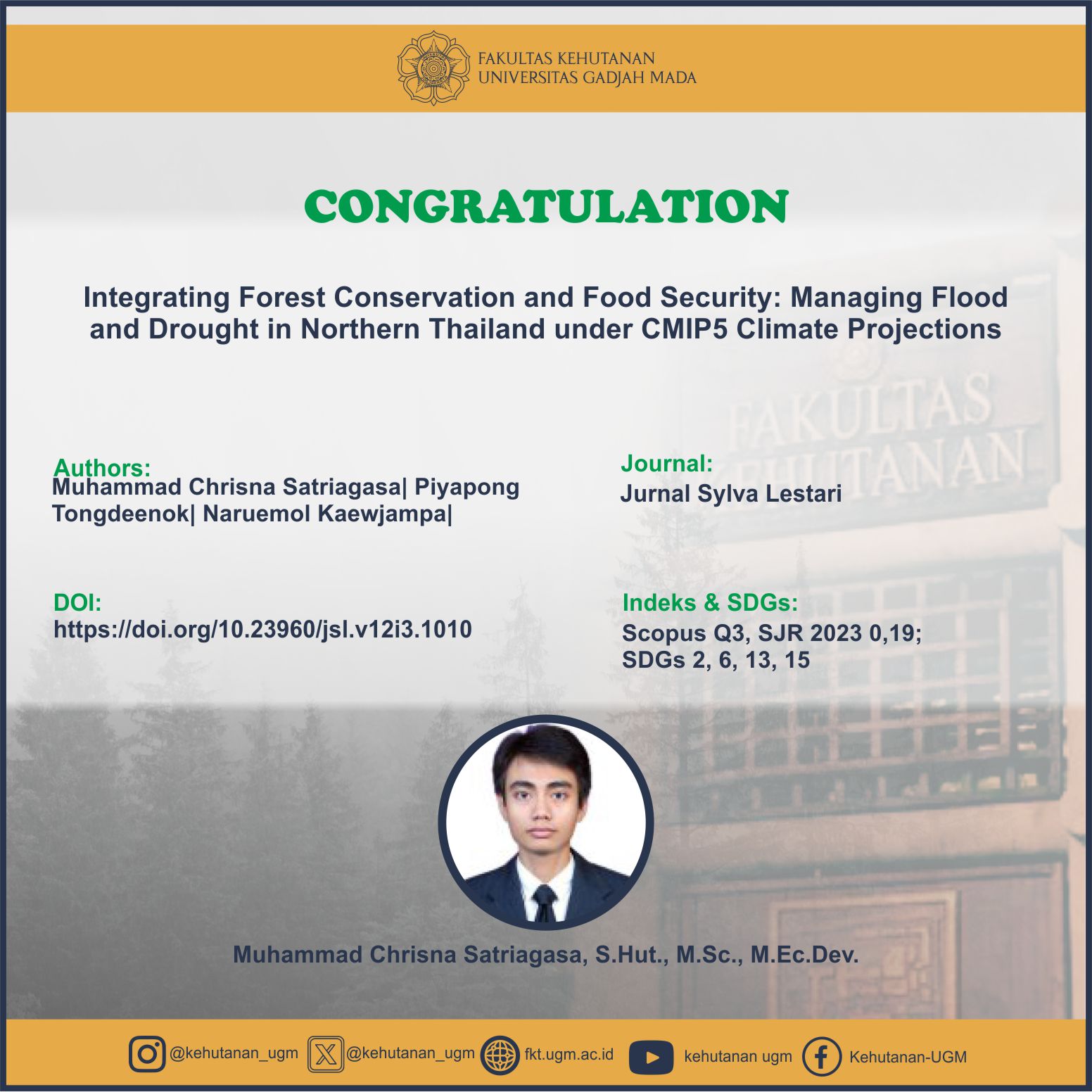
Increasing food demand and climate change-induced natural disasters pose significant challenges to food security. This study examines how forest conservation can mitigate disaster risks to agricultural land in Northern Thailand’s watershed. The Soil and Water Assessment Tool (SWAT) and Hydrologic Engineering Center’s-River Analysis System (HEC-RAS) models were used to assess flood impacts, while the standardized precipitation and evapotranspiration index

Abstract
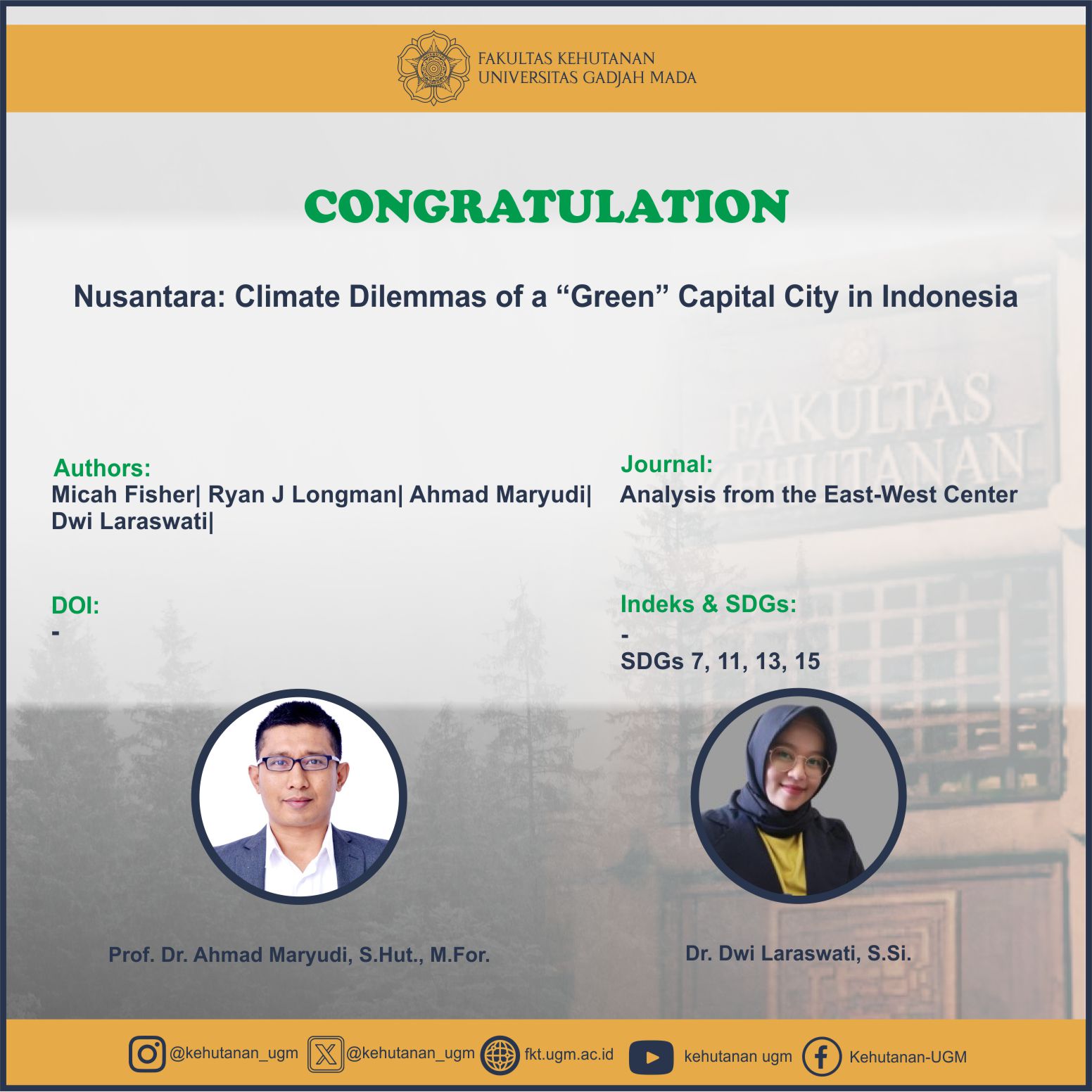
Even before Indonesia’s independence, its leaders had drafted plans to relocate the capital city. Proponents gave various reasons at different times, but with Jakarta’s stifling traffic and perennial flooding, the government is now translating visions of relocation into action. Construction of the new capital, Nusantara, is already underway in East Kalimantan province. Nusantara is an ambitious and symbolic nation-building project that positions Indonesia

Abstract
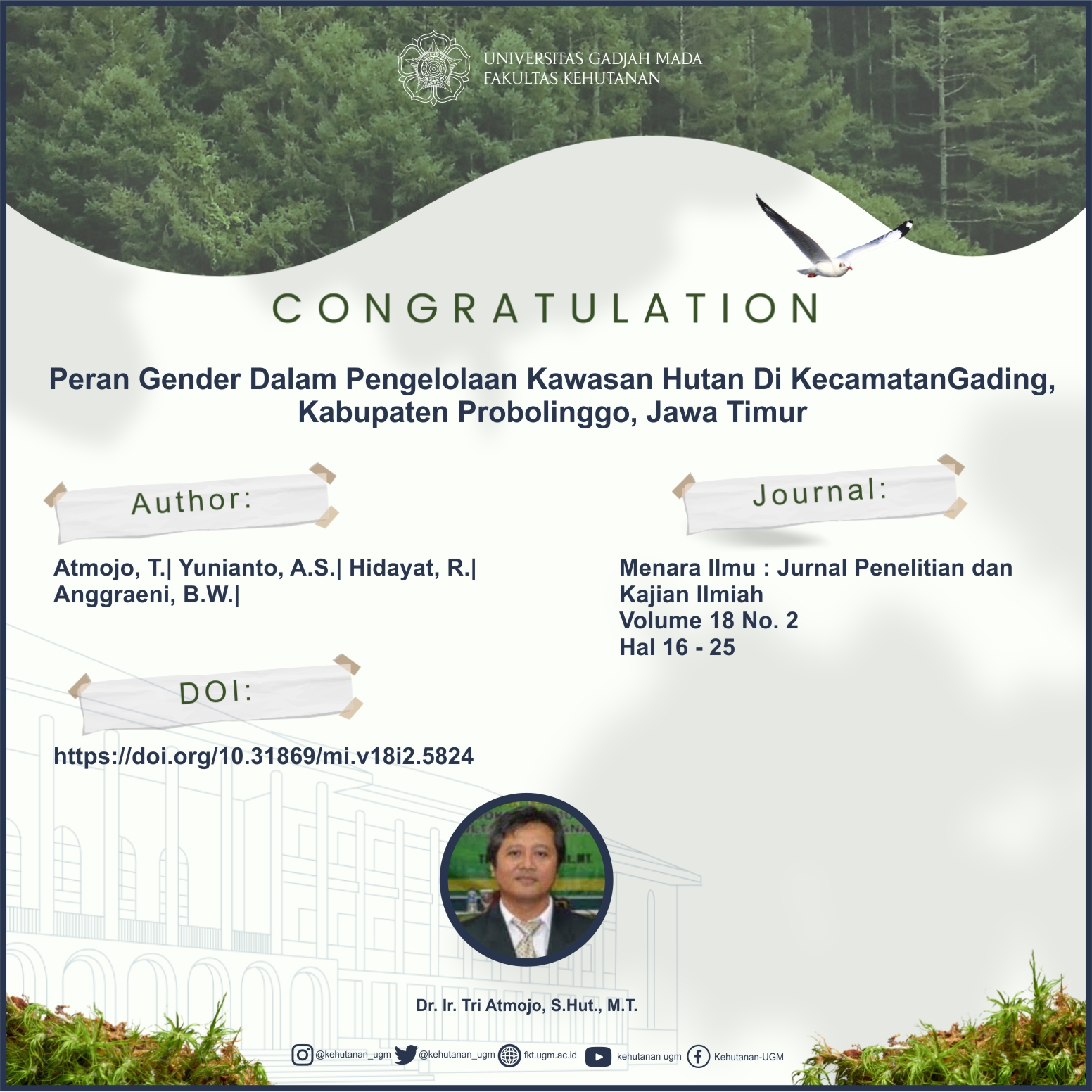
Manfaat keberadaan hutan belum sepenuhnya dapat dirasakan oleh masyarakat karena deforestasi. Perhutanan sosial merupakan salah satu kebijakan dalam mengatasi problem tersebut. Dalam pelaksanan program perhutanan sosial, peran gender menjadi penting. Hal ini juga sejalan dengan Tujuan SDGs ke 5 menyebutkan adanya Kesetaraan Gender. Penelitian ini bertujuan untuk mengidentifikasi peran gender dalam pengelolaan kawasan hutan. Penelitian ini dilakukan di Kelompok

Abstract
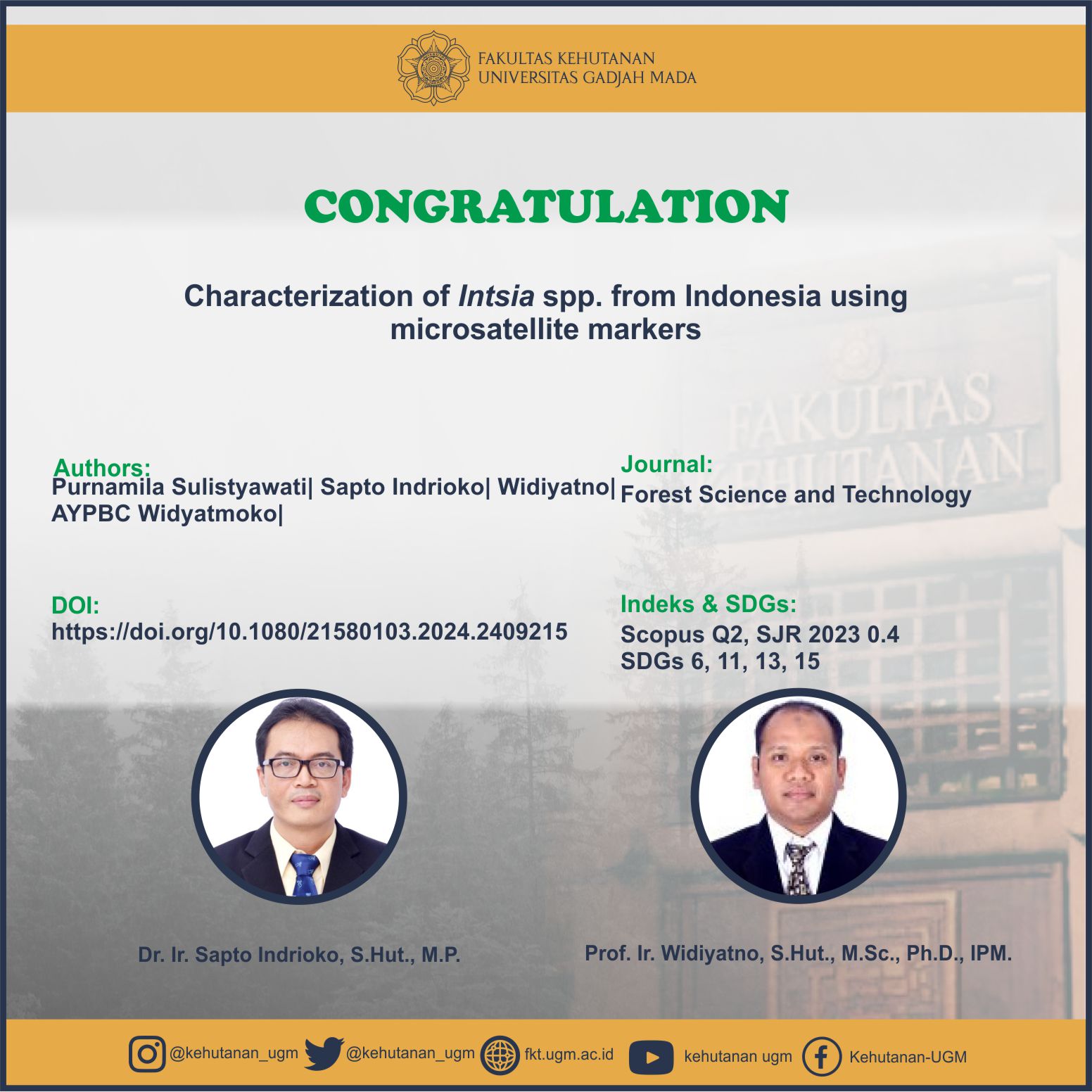
Microsatellite DNA markers are known to have a high level of genetic diversity and can be used for various purposes. These include population genetic analysis, gene flow assessment, pollen distribution, parent analysis, and accurate distinction between types and varieties. Despite the potential application of microsatellite markers, their development process often requires high costs, energy, and time. To overcome the limitations, several studies have proposed
Webinar Seri 2 dalam peringatan Dies Natalis ke-61 Fakultas Kehutanan Universitas Gadjah Mada mengangkat tema: “Perhutanan Sosial untuk Kelestarian Hutan dan Kesejahteraan Masyarakat”. Webinar ini dilaksanakan pada Kamis, 26 September 2024. Kegiatan berlangsung secara daring, dengan menghadirkan berbagai narasumber dari multipihak, meliputi pemerintah, NGO, hingga pakar/guru besar guna terciptanya diskusi yang komprehensif. Webinar diikuti oleh 665 peserta dengan 454 peserta tergabung dalam

Abstract
Two first-generation progeny trials of Ficus variegata Blume were planted in Yogyakarta, Indonesia, consisting of 17 families from the provenances of West Nusa Tenggara (WNT) and 19 families from the provenances of Cilacap-Pangandaran (C-P), respectively. The trials were evaluated after 10 years for growth characteristics [diameter (D), tree height (H) and stem volume (V)] and wood properties [stress-wave velocity (SWV) and Pilodyn penetration (P)]. Genetic

Abstract
Shoot waste refers to the parts of trees that are not yet optimally utilized. In this study, we aimed to utilize shoot waste of fast-growing teak (FGT) extracted from the community forest in Wonosari, Gunungkidul, Yogyakarta Special Region, Indonesia by converting it into charcoal, followed by further conversion into activated carbon. This study was conducted with two treatment factors of the activation process, including thermal treatment (750°C, 850°C,